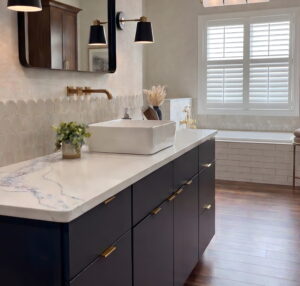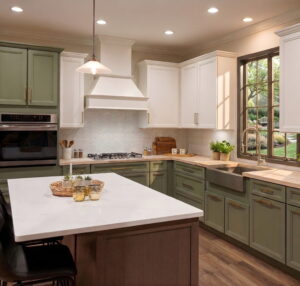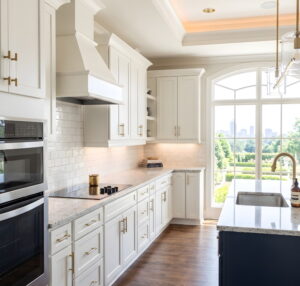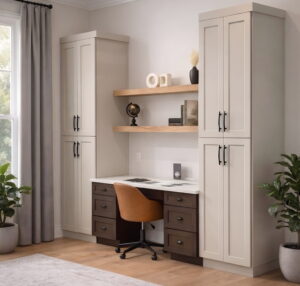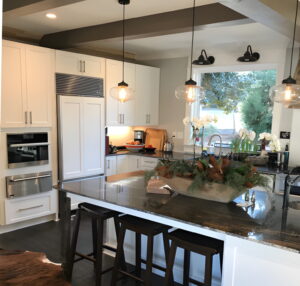
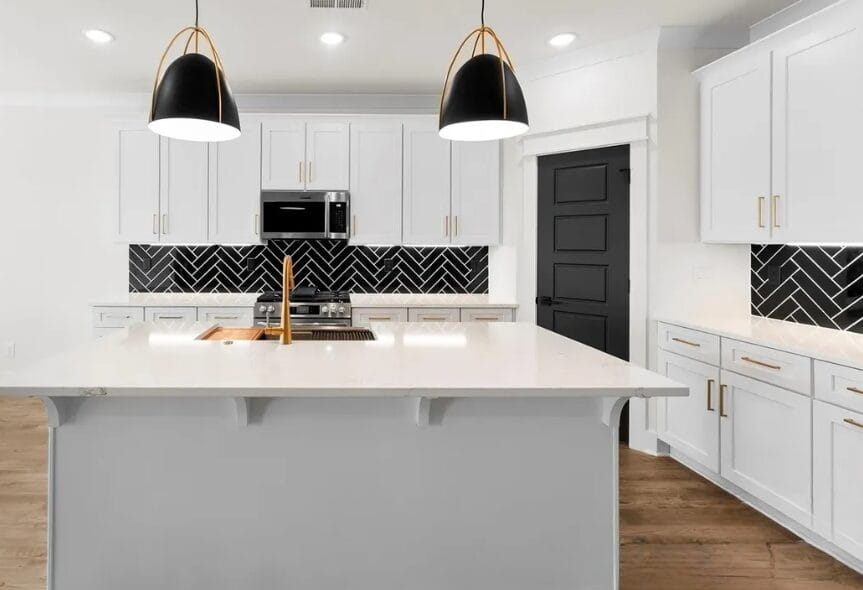
Many homeowners assume that working with regional cabinet builders will be too expensive. The truth is, kitchen cabinets are a worthwhile investment.
Most people walk into a large retail store, pick a door style, place an order, and wait for delivery. On the surface, the process feels efficient and predictable. Yet local cabinet makers and experienced renovators understand that the reality is far more nuanced.
Cabinet performance, durability, installation tolerances, and long-term warranty support can vary significantly depending on where cabinets are sourced. Choosing between a cabinet builder and a big box retailer is not simply about price; it is about kitchen cabinet quality, design flexibility, supplier reliability, and long-term value.
According to the National Kitchen and Bath Association (NKBA), cabinetry accounts for nearly 30% of the kitchen remodeling budget, making it one of the most important investment decisions in the entire project.
Key Takeaways
- Cabinet construction standards significantly influence long-term durability and homeowner satisfaction.
- Semi-custom cabinet programs offer design flexibility without the full-custom cost.
- Predictable lead times help builders control project schedules and budgets.
- Warranty coverage is a critical indicator of cabinet quality and manufacturer confidence.
- Working with a cabinet builder through a dealer network supports better project outcomes.

Understanding How Regional Cabinet Builders Approach Quality
A professional cabinet builder typically focuses on:
- Consistent manufacturing standards
- Controlled material sourcing
- Repeatable construction processes
This structured approach often results in more reliable cabinet performance than mass-retail cabinet programs that prioritize inventory turnover and cost compression.
Cabinet construction quality is measurable. The Kitchen Cabinet Manufacturers Association (KCMA) notes that cabinets meeting KCMA certification standards must pass durability tests, including:
- Door-cycle testing
- Drawer-load testing
- Finish performance evaluation
These benchmarks help ensure cabinets withstand years of daily use.
Cabinet manufacturers serving builders and dealers often standardize features such as:
- Plywood or furniture board box construction
- Reinforced corner joints
- Soft-close hardware systems
- Catalyzed finishes designed to resist moisture and abrasion
These details influence cabinet longevity far more than visible design elements.
By contrast, some big-box cabinet lines rely on flat-pack components or imported materials that can vary in density and finish consistency. While not universally lower quality, variability across product lines can create uncertainty for builders managing tight installation schedules.
Homeowners evaluating cabinet quality should consider not only the door style or color, but also:
- Hinge durability
- Drawer glide ratings
- Finish warranties
- Structural assembly methods
A cabinet builder relationship often provides clearer documentation and dealer guidance around these technical factors.
Design Flexibility: Semi-Custom Cabinets vs Retail Cabinet Limitations
Design flexibility is one of the most significant differences between working with a regional cabinet builder and purchasing from a big box retailer.
Semi-custom cabinets allow adjustments to:
- Cabinet width and height increments
- Storage configurations
- Molding and trim details
- Finish coordination across the kitchen
This flexibility allows builders to design kitchens around the space rather than forcing the space to fit standard cabinet sizes.
Retail cabinet programs typically operate with limited SKU selections to streamline inventory. While this allows for faster purchasing, it can restrict layout optimization and reduce storage efficiency. Cabinet builders also work through cabinet dealer networks that assist with:
- Layout planning
- Ensuring alignment with appliances
- Architectural constraints
- Overall design intent

Lead Times, Supply Chains, and Project Predictability
Supply chain stability has become a central concern for builders and homeowners alike. Construction delays related to cabinet availability can cascade into scheduling conflicts with countertop installers, electricians, and flooring contractors.
Manufacturers focused on dealer networks often operate regional production facilities and structured logistics systems. This provides more predictable lead times than globally sourced cabinet inventory, which may be subject to shipping disruptions or port delays. The Joint Center for Housing Studies at Harvard University has highlighted supply chain volatility as a key driver of remodeling cost uncertainty in recent years.
Big box retailers may advertise rapid cabinet availability, but backorders can still occur due to centralized distribution constraints or seasonal demand spikes. Builders managing multiple projects benefit from local cabinetmakers who offer transparent production schedules and proactive communication.
Reliable lead times influence more than convenience. They affect labor efficiency, carrying costs, and client satisfaction. A delayed cabinet delivery can extend temporary housing expenses or push a project beyond contractual completion dates. Regional cabinet builders often mitigate this risk through coordinated dealer support and production forecasting.
Warranty Coverage and Long-Term Value
Cabinet purchases should be evaluated as long-term investments rather than short-term construction line items. Warranty coverage is a meaningful indicator of a manufacturer’s confidence in product durability.
Many cabinet builders offer limited lifetime warranties on cabinet boxes and hardware, subject to proper installation and normal residential use. Finish warranties may vary, but frequently cover issues such as peeling, blistering, or excessive discoloration. These protections can preserve kitchen value and support resale confidence.
From a financial perspective, better-constructed cabinets often reduce lifecycle replacement costs. Better-quality materials always translate into higher resale value. Cabinets that maintain structural integrity and finish appearance contribute to perceived home value and buyer confidence.
Working with a local cabinet builder through a knowledgeable dealer helps clarify warranty expectations, maintenance requirements, and service pathways should support be needed in the future.
Retail cabinet warranties can vary significantly across brands and may include exclusions for moisture exposure or installation conditions. Homeowners who are unaware of these details may discover limitations only after a performance issue occurs.
How to Evaluate Regional Cabinet Builders Near You for Quality and Reliability
If you are searching for cabinet suppliers, it is important to go beyond location and evaluate supplier capabilities.
Start by reviewing:
- Cabinet construction specifications
- Material quality (plywood vs engineered panels)
- Hardware performance ratings
- Finish systems and certifications
Next, assess supplier reliability:
- Are lead times clearly communicated?
- Is there dealer support for design and installation?
- Are warranty terms transparent and comprehensive?
Dealer-supported cabinet builder programs often include design consultation, order verification, and installation guidance, reducing risk during complex renovations. Comparing cabinet suppliers using these criteria ensures better alignment between budget, performance expectations, and long-term satisfaction.
How to Choose Between a Regional Cabinet Builder and Big Box Cabinets for Your Project
Choosing between a local cabinet builder and big box cabinets depends on your project goals, budget, and expectations for long-term performance.
Local cabinet builders are typically the better choice for:
- Higher kitchen cabinet quality
- Semi-custom design flexibility
- Reliable production timelines
- Strong warranty coverage
Big box cabinets may be suitable for:
- Smaller or budget-driven projects
- Quick replacement needs
- Simpler kitchen layouts
By comparing cabinet construction types, warranty coverage, and supplier reliability, homeowners and builders can make informed decisions that support both functionality and long-term home value.
FAQs on Regional Cabinet Builders vs. Big Box Retailers
What is the difference between a cabinet builder and a cabinet retailer?
A cabinet builder manufactures cabinets with defined construction standards and often sells through trained dealers. Retailers typically sell preconfigured cabinet lines sourced from multiple suppliers.
How long do quality kitchen cabinets last?
Well-constructed cabinets can last 20 to 30 years or more with proper maintenance, according to the National Association of Home Builders’ lifecycle estimates.
Do cabinet warranties really matter?
Yes. Warranty coverage protects against manufacturing defects and can influence resale confidence if the home is sold in the future.
How do I find local cabinet builders near me?
Most cabinet builders provide dealer locator tools that connect homeowners and builders with authorized local partners who can assist with design and ordering.
Find a Regional Cabinet Builder Near You for Better Quality and Long-Term Value
If you are evaluating cabinet options, working with a trusted cabinet builder provides access to higher-quality materials, flexible design solutions, and reliable production timelines.
Century Cabinets partners with experienced dealers to deliver semi-custom cabinets, consistent construction standards, and dependable warranty support, helping homeowners and builders achieve kitchens that perform as well as they look.
Find a Century Cabinets dealer near you or contact our team today to start your project with confidence.